
Gasketed plate-and-frame heat exchangers
Alfa Laval doesn’t do average. Whether it is our multi-purpose Industrial range; the Semi-welded industrial range for refrigeration and exacting processes; the Hygienic range for food, beverage and pharma applications; or the Specialized range for condensation, evaporation and fibrous media – you buy into reduced cost of ownership and increased efficiency and safety.
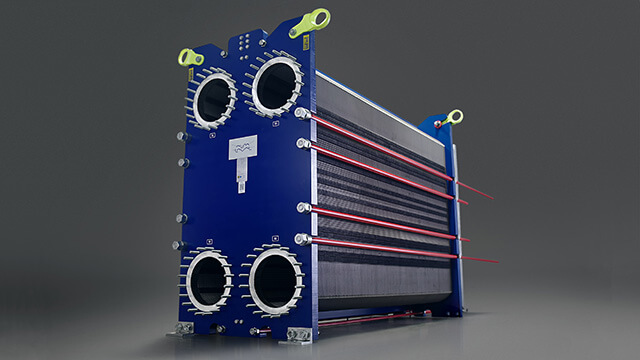
Gasketed plate heat exchangers for modern requirements
- Highest thermal efficiency and close temperature approach
- Compact units - space saving, easy to service and maintain
- Maximum uptime - less fouling, stress, wear and corrosion
- Flexible - easy to adapt to changed duty requirements
Our Gasketed plate heat exchangers are optimizing heat transfer by large surfaces of corrugated plates drawing heat from one gas or liquid to the other. The high efficiency and an outstanding reliability in a compact design, offers an investment with the most attractive CTO over the product life time. Not to forget the energy saving capabilities and low environmental footprint.
Ask the HEXperts about GPHE performance
Is your gasketed plate heat exchanger running at its best? Discover how expert servicing and reconditioning can help restore efficiency, reduce downtime and extend equipment life.

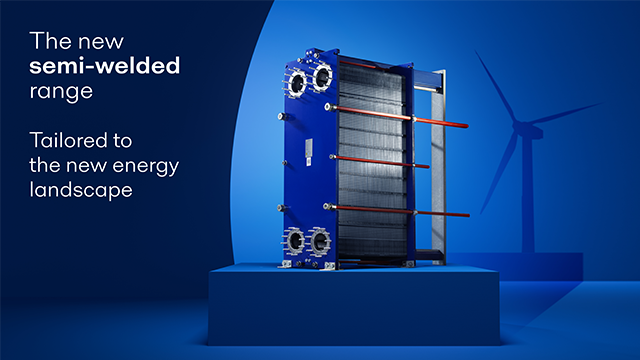
Tailored to the new energy landscape
Concept Zero − The invisible revolution
Concept Zero is our vision and target to produce the world’s first carbon neutral heat exchanger by 2030. It will be a heat exchanger using fossil-free steel and recycled material in the gaskets. Additionally, the heat exchanger is prepared to easily be recycled. A huge step already now on our journey towards a fully carbon neutral heat exchanger.
Plate and gasket technology
The design of the corrugated plates optimizes heat transfer by providing a large but compact total surface area through which the heat can be drawn from one liquid or gas to another.
The heat transfer area of the plates is pressed in a corrugated herringbone pattern. When two plates are superimposed with opposing herringbone patterns, the helix-like flow and high turbulence results in high transfer coefficients and effective self-cleaning.
A change in the corrugation pattern enables the heat exchanger to be used in different processes, even those with very dirty media.
Distribution area
The plate distribution area ensures an even flow of fluid over the entire plate to maximize the heat transfer capability. An optimized flow distribution also reduces fouling and uneven temperature zones keeping the performance levels high over time without unnecessary energy losses, maintenance costs or unplanned stops.
Gaskets are key components in heat exchanger performance. We design the gasket and plate as one to assure an optimized seal. Each is tailored to the duty of the heat exchanger. The correct profile, width, thickness, and polymer type and compound make a world of difference in avoiding the risk of premature leakage or gasket or plate damage. Your benefits are prolonged gasket life, less downtime and lower maintenance costs.
Gasket profile
Gasket glue
What are the special plate types in an Alfa Laval plate heat exchanger?
Double-wall gasketed plate heat exchangers
Designed for use with fluids that cannot be allowed to mix. Prevents leaking fluid coming into contact with the fluid in the other circuit.
Wide-gap plates
Ideal for fluids containing fibers or coarse particles. Designed to eliminate bridging of solids in the entrance area.
Semi-welded plates
Enable aggressive and difficult fluids to be handled, and also extend the pressure range.
Diabon® graphite non-metallic plates
A composite of fused graphite and fluoroplastic provides excellent resistance to corrosive materials.
How does a plate heat exchanger work?
The concept behind a heat exchanger is relatively simple – heating or cooling one medium by transferring heat between it and another one.
In a gasketed plate and frame heat exchanger, the plates are fitted with elastomeric gaskets which seal the channels and direct the media into alternate channels. The plate pack is assembled between a frame plate and a pressure plate, and compressed by tightening bolts fitted between these plates. The channel plates and the pressure plate are suspended from an upper carrying bar and fixed in position by a lower guiding bar, both of which are fixed to the support column. The design allows easy cleaning and simple capacity modification (by removing or adding plates).
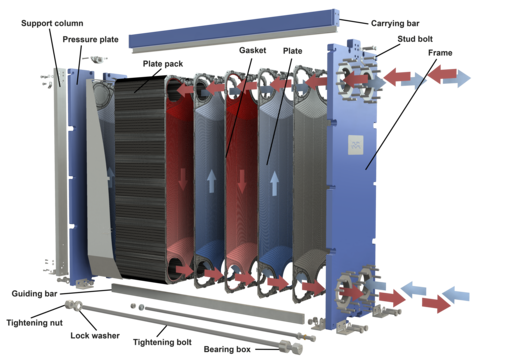
The heat transfer area of a gasketed plate and frame heat exchanger consists of a series of corrugated plates, assembled between a frame and pressure plates to retain pressure. Gaskets act as seals between the plates. Fluids normally run counter-currently through the heat exchanger. This gives the most efficient thermal performance and enables a very close temperature approach, i.e. the temperature difference between the exiting process medium and the entering service medium.
For heat sensitive or viscous media, co-current flow can be used to let the coldest fluid meet the hottest when entering the heat exchanger. This minimizes the risk of the media overheating or freezing.
Plates are available with various pressing depths, angles of the chevron pattern, and various corrugation shapes, all carefully designed and selected to achieve optimal performance. Depending on the application, each product range has its own specific plate features.
The distribution area ensures fluids are evenly distributed across the entire heat transfer surface and help avoid stagnant zones that may cause fouling.
While high flow turbulence between plates results in higher heat transfer, the consequence is pressure drop. Our thermal design engineers can help you design and select the model and configuration that is suitable for your application so that it delivers maximum thermal performance with minimum pressure drop.
Conventional gasketed plate heat exchangers
Hygienic applications
Specific applications
Get in touch with our experts today
We’re here to help. If you have an enquiry or want to learn more about Alfa Laval's products, services and solutions, please fill out the form. Our experts are ready to assist you and will get back to you shortly.
Other quick ways to contact us
While this form is the best way to get in touch, you can also speak with a member of our team by phone at 01276 63383 during business hours: Monday - Friday, 08:30 - 17:00.
Energy Hunter – Hunting for waste energy
To improve energy efficiency, we all need to hunt down and reduce waste energy. Alfa Laval has the technology, expertise, and service to maximize your heat transfer efficiency. Use our new tool to calculate how much you can save today.

Accelerating sustainable solutions
Imagine a more sustainable world. A world in which less is needed to produce even more. A world in which we efficiently meet our growing energy needs and at the same time reduce CO2 emissions. Imagine a world where we can harness the power of natural resources while preserving them. At Alfa Laval, we don't just imagine this world. We build it together with our customers and our partners.

Gasketed Plate & Frame Heat Exchangers - Frequently Asked Questions
What is a gasketed plate and frame heat exchanger?
A gasketed plate and frame heat exchanger is a type of heat transfer equipment made up of a series of thin, corrugated metal plates held together in a frame. Each plate is sealed with a gasket that directs two separate fluids into alternating channels, allowing heat to transfer between them without the fluids mixing. The gasketed design means the unit can be easily opened, cleaned, and reconfigured - making it one of the most flexible and maintainable heat exchanger types available.
Alfa Laval pioneered the plate heat exchanger concept and has been refining the technology for over 130 years. Today, Alfa Laval’s gasketed plate and frame heat exchangers are used in thousands of installations across more than 100 countries, across industries ranging from food and beverage to energy and marine.
What are the main advantages of a gasketed plate heat exchanger over a shell and tube heat exchanger?
Gasketed plate heat exchangers offer several key advantages over traditional shell and tube designs:
- Higher thermal efficiency - the corrugated plate design creates turbulent flow, maximising heat transfer in a much smaller footprint
- Easier maintenance - plates can be accessed, cleaned, and replaced without specialist equipment
- Flexible capacity - plates can be added or removed to increase or decrease capacity as your process needs change
- Lower capital cost - for equivalent thermal duty, gasketed plate units are typically more cost-effective
- Compact size - they require significantly less floor space and pipework
Alfa Laval’s own engineering data consistently demonstrates that gasketed plate heat exchangers can achieve up to 5 times greater heat transfer efficiency per unit area compared to shell and tube equivalents - a finding backed by decades of real-world application data across global installations.
What industries use gasketed plate and frame heat exchangers?
Gasketed plate and frame heat exchangers are used across a wide range of industries including food and beverage, dairy, pharmaceuticals, HVAC and district heating, chemical processing, marine, power generation, and oil and gas.
As a global leader in heat transfer, Alfa Laval has accumulated deep application knowledge across all of these sectors. This breadth of experience means Alfa Laval engineers can draw on proven, real-world solutions - not just theoretical models - when recommending the right equipment for your process. Alfa Laval’s hygienic design options are particularly well regarded in food, dairy, and pharmaceutical applications where product purity and regulatory compliance are non-negotiable.
What fluids can be processed in a gasketed plate heat exchanger?
Gasketed plate heat exchangers can handle a broad range of fluids including water, steam, oils, glycol, acids, alkalis, and many process liquids. The choice of plate material - typically stainless steel, titanium, or specialist alloys - and gasket material must be carefully matched to the fluid’s temperature, pressure, viscosity, and chemical compatibility.
Alfa Laval’s materials engineering expertise, developed over more than a century of industrial application, ensures that every unit is specified with the right combination of materials for long-term reliability. Incorrect material selection is one of the most common causes of premature heat exchanger failure - working with an experienced manufacturer significantly reduces this risk.
What are the temperature and pressure limitations of gasketed plate heat exchangers?
Gasketed plate heat exchangers are generally suited to operating temperatures between -25°C and +200°C and pressures up to approximately 25 bar, depending on the model and gasket material selected. For applications requiring higher temperatures or pressures, welded or semi-welded plate heat exchanger variants may be more appropriate.
Alfa Laval offers one of the most comprehensive portfolios of plate heat exchanger technologies in the world - meaning that whatever your process demands, there is likely an Alfa Laval solution engineered to meet it. Their application engineers can advise on the most suitable technology based on your exact operating parameters.
How do I choose the right gasketed plate heat exchanger for my application?
Selecting the right unit involves several key parameters: the required heat duty (kW or MW), inlet and outlet temperatures for both fluids, flow rates, fluid properties (viscosity, fouling tendency, corrosiveness), and available pressure drop. Using an incorrectly sized unit can lead to poor performance, excessive fouling, or premature failure.
Alfa Laval’s engineering teams use proprietary sizing and simulation tools - refined over decades of global installations - to carry out precise thermal and hydraulic calculations. This in-house expertise, combined with one of the largest installed bases of plate heat exchangers in the world, means Alfa Laval recommendations are grounded in real operational experience, not just theoretical design.
Can a gasketed plate heat exchanger be expanded or reconfigured after installation?
Yes - this is one of the most significant practical advantages of the gasketed plate and frame design. Because the unit is held together mechanically in a frame, additional plates can be added to increase capacity, or plates can be removed if process requirements decrease. This scalability makes gasketed plate heat exchangers an excellent long-term investment, particularly in processes where throughput is expected to grow.
Alfa Laval designs its plate and frame systems with this future flexibility in mind. Many customers have been running and incrementally expanding the same Alfa Laval frame for 20 or more years - a testament to both the durability of the equipment and the long-term availability of genuine spare parts and plates.
How long do the gaskets in a plate heat exchanger last?
Gasket lifespan varies depending on operating temperature, pressure, fluid type, and the gasket material used. Under normal operating conditions, gaskets typically last between 5 and 10 years. However, exposure to aggressive chemicals, thermal cycling, or operation outside design parameters can shorten this considerably.
Alfa Laval manufactures and supplies genuine replacement gaskets engineered to exact OEM specifications for every model in its range. Using non-genuine or incompatible gaskets is a leading cause of leaks and unplanned downtime - Alfa Laval’s service teams see this regularly in the field. Genuine parts, combined with a planned maintenance schedule, are the most reliable way to protect long-term performance and avoid costly process interruptions.
Are gasketed plate heat exchangers suitable for hygienic or food-grade applications?
Yes. Alfa Laval’s gasketed plate heat exchangers are available in hygienic designs that comply with international food safety standards including EHEDG and 3-A Sanitary Standards. These units feature smooth, crevice-free surfaces, FDA-approved gasket materials, and are designed for effective clean-in-place (CIP) and sterilise-in-place (SIP) procedures.
Alfa Laval has been a trusted supplier to the global food, dairy, and beverage industry for well over a century. This long-standing relationship with some of the world’s most demanding food producers has driven continuous innovation in hygienic design - making Alfa Laval one of the most specified brands in this sector globally.