HVAC
From London to Manchester and beyond, UK cities are at the heart of the climate crisis - with heating and cooling making up a significant share of national energy consumption. With buildings responsible for around 26% of UK greenhouse gas emissions, the need for action is clear. Alfa Laval, with almost a century of HVAC heat exchanger expertise, aims to be carbon neutral by 2030. Let us be your partner in building a sustainable tomorrow.

Efficient HVAC systems are the key to sustainable cities
- Flexible, robust, and efficient energy systems make it possible to switch between different energy sources without any adjustments.
- Fossil-free energy sources that allow us to reduce the CO2 footprint.
- Heat-efficient buildings with reduced carbon footprint that save energy while catering for the needs of their occupants.
- AHRI third-party certification program offers confident assurance of the heat exchangers' design and performance in all parts of the energy system.
Energy efficiency to power net zero climate goals
Across the UK - from London and Manchester to Birmingham and Glasgow - cities are at the centre of the nation’s energy challenge. Urban areas account for the majority of the UK’s CO₂ emissions, with heating and cooling among the largest energy expenses for buildings and infrastructure. With the UK’s net zero 2050 target firmly in place, this sector demands urgent action.
The UK’s built environment contributes around 26% of national greenhouse gas emissions, making the shift away from fossil-fuel-based heating systems a national priority.
With almost a century of experience in heat transfer efficiency and recovery, Alfa Laval has the solutions ready. Our compact, energy-saving plate heat exchangers work seamlessly with heat networks, heat pumps, and renewables - supporting the UK’s growing district heating schemes and retrofit projects alike. We aim to be carbon neutral by 2030. Let us be your partner in the UK’s clean energy transition.
Get in touch with our experts today
We’re here to help. If you have an enquiry or want to learn more about Alfa Laval's products, services and solutions, please fill out the form. Our experts are ready to assist you and will get back to you shortly.
Other quick ways to contact us
While this form is the best way to get in touch, you can also speak with a member of our team by phone at 01276 63383 during business hours: Monday - Friday, 08:30 - 17:00.
Flexible and efficient energy systems
1. District heating
Heat exchangers are at the heart of district heating systems. Find out more about Alfa Laval’s unique application knowledge. >>Learn more
2. District cooling
Alfa Laval is a front runner in developing solutions for demanding district cooling installations, with heat exchangers providing cost and energy efficient cooling all over the world. >>Learn more
Fossil free energy and heat recovery
3. Heat recovery
Alfa Laval works with a wide range of industries, providing new, productive, and profitable ways of using even low-temperature waste heat. .>>Learn more
4. Geothermal heating
Alfa Laval has the application knowledge and technology to efficiently integrate geothermal heating into district and community heating networks. >>Learn more
5. Solar thermal heating
Solar heating and concentrated solar power (CSP) coupled with thermal storage can help secure future energy supplies. Find out more about the state-of-the-art technologies that are making it possible. >>Learn more
6. Industrial heat pumps
nd out how Alfa Laval plate heat exchangers maximize low-temperature heat transfer in industrial heat pumps and enable carbon-free heat. >> Learn more
Energy efficient buildings
7. Energy efficient buildings
Planning a building’s heating or cooling system is a complex task. With a broad portfolio of solutions and extensive experience worldwide, we can help. >>Learn more
8. Heat-efficient solutions for swimming pools, spas & saunas, and greenhouses
Alfa Laval provides compact plate heat exchangers that maintain near-constant, year-round water temperature control and add value to low-temperature waste for greenhouse heating. >>Learn more
9. Efficient air conditioning
New regulations that require Low GWP (Global Warming Potential) refrigerants continue to enter the air conditioning arena. We can accelerate industry development, supplying energy-efficient heat exchangers that meet these requirements.>>Learn more
10. Residential heat pumps
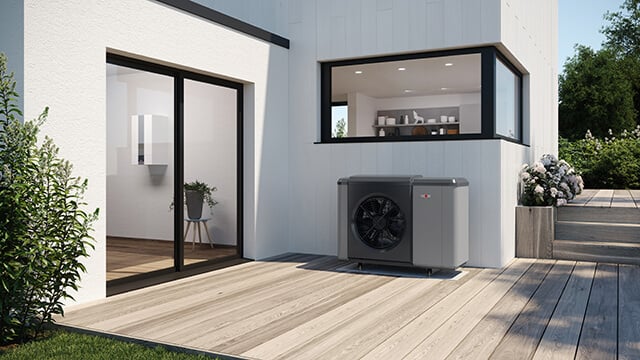
Demand continues to rise for energy efficient heat exchangers that are optimized for heat pump compatibility, including Alfa Laval’s latest innovation .>>Learn more
See the numbers: HVAC energy efficiency potential
Heating and cooling are some of a city’s largest energy expenses, yet basic needs for all individuals. Since most of the energy used for heating and cooling today is produced from fossil fuels, this sector requires urgent action.
Fortunately, the design of HVAC systems offers an enormous untapped potential for improving the climate impact of our buildings. Whether it’s about more efficient solutions that reduce energy and water consumption, or the phasing out of refrigerants with high global warming potential (GWP), there is much we can do already today. A heat pump, for example, is four times more efficient than a boiler for heating residential and commercial buildings, enabling incredible potential to shrink energy consumption and carbon emissions.
Imagine if we replaced all of today’s residential and commercial HVAC boilers with efficient heat pumps. The annual energy savings would be 230 TWh. That’s the same amount of electricity as that consumed every year in all of Spain!
Want to learn more about how Alfa Laval can maximize the energy efficiency of various HVAC applications? Download our infographics to see more numbers.
For a sustainable future - Carbon Capture, Green Hydrogen and Energy Storage
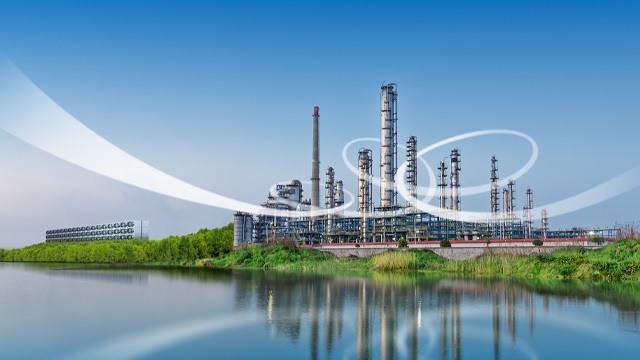
Decarbonization of Cities is one of the most complex challenges of our time. It will require completely transforming our global energy system, and this means that there is no single or simple solution. Beside constantly working with energy efficiency, reusing the energy already produced and for example working with excess from industries and Cities for comfort heat , it will take a combination of technologies and solutions, and advancing clean energy in order to reach the Paris agreement and climate challenges. Alfa Laval has a number of initiatives and already installed products in solutions that will be important for the future. Read more about Carbon Capture, Green hydrogen and thermal storage here.
A beacon of energy-efficient excess heat recovery
Recovering industrial excess heat with heat exchangers and using it for district heating is one of the most effective ways to improve energy efficiency on a global scale. The Aurubis Group has taken this very approach to improve sustainability in one of their smelters.
Find your ideal HVAC heat exchanger online
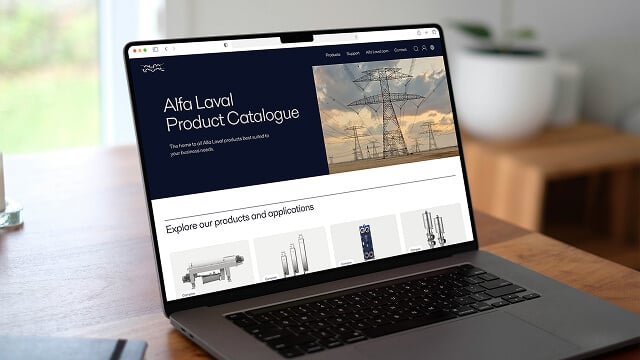
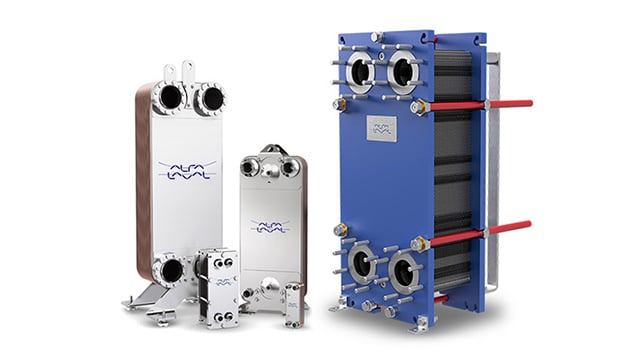
Optimise your HVAC system with Alfa Laval's efficient heat exchangers for heating and cooling in any building type. From brazed to gasketed, we have solutions for radiators, tap water, pools, underfloor heating, and more. Browse our catalogue to find the right heat exchanger for your project and request a quote today.
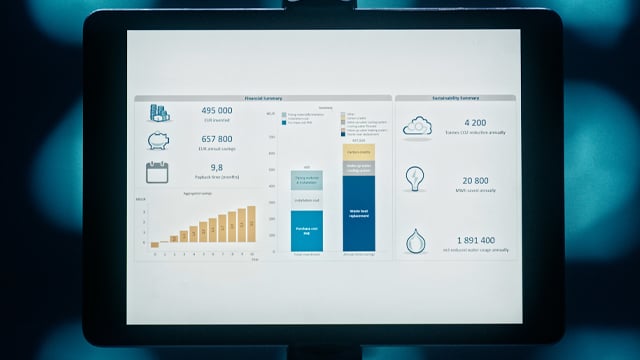
Energy Hunter – Sustainable solutions by hunting for waste energy
To improve energy efficiency, we all need to hunt down and reduce waste energy. Alfa Laval has the technology, expertise, and service to maximize your heat transfer efficiency. Use our new tool to calculate how much you can save today.
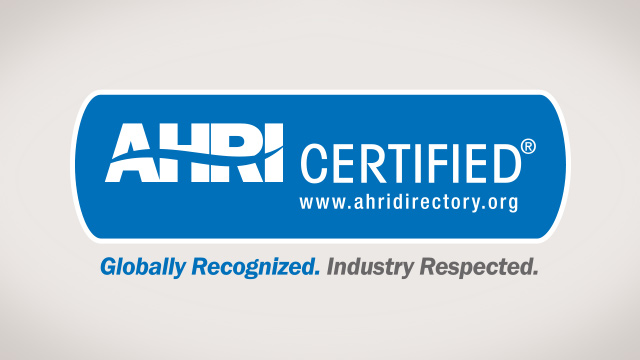
AHRI-performance-certified heat exchangers for confident thermal performance
Certification from the Air-Conditioning, Heating, and Refrigeration Institute (AHRI) is the only global third-party verification of thermal performance, giving you independent assurance that your plate heat exchanger will perform in accordance with the manufacturer’s published ratings. Alfa Laval offers AHRI-certified gasketed plate heat exchangers, brazed plate heat exchangers, and fusion-bonded plate heat exchangers.
Consultant? System integrator?
Are you a consultant? Look here! With expertise from decades of experience in heat exchange, Alfa Laval offers knowledgeable resources for today’s heating and cooling challenges. Discover answers to complex questions on everything from energy efficiency to natural refrigerants, along with helpful tools that make it simpler to find the right technology for your application.
Digitalization for energy efficiency
Smart cities and digital intelligence could help cities to make progress toward meeting 70 percent of their Sustainable Development Goals. Digital services can already have a significant impact on heating and cooling systems in cities, making them more sustainable.
Enabling remote monitoring and performing dedicated analytics allow more precise and efficient operation, more informed decision-making, and targeted interventions. The development of more sophisticated and efficient heating and cooling systems is only possible through this digital transformation, which can provide reliable and affordable heating and cooling services to urban areas while reducing greenhouse gas emissions.
Making efficiency last for decades
A poorly functioning heat exchanger may affect safety, product quality and energy costs. Failure may lead to costly downtime and major losses in production. By regular and proactive maintenance of your gasketed plate heat exchanger performance is preserved and operations kept trouble-free and predictable.
We have the expertise to help you whether you experience a problem today, wish to prevent future issues or want to solve the problem yourself with our online troubleshooter.
HVAC, District Heating & Heat Recovery — Frequently Asked Questions
What is district heating and how does it work?
District heating is a centralised energy distribution system that generates heat at a single source - such as a combined heat and power (CHP) plant, waste-to-energy facility, industrial process, or renewable energy installation - and distributes it to multiple buildings via a network of insulated underground pipes. Hot water circulates through the network and transfers its heat to individual buildings via heat interface units (HIUs) or substation heat exchangers, before returning to the central source to be reheated and recirculated.
District heating eliminates the need for individual boilers in every building, reducing maintenance complexity, improving energy efficiency at scale, and enabling the use of low-carbon or waste heat sources that would be impractical for individual buildings to access. Alfa Laval supplies high-efficiency heat exchangers and HIUs that are used in district heating networks across the UK and Europe - from large urban schemes to mixed-use residential and commercial developments.
What is district cooling and how is it different from district heating?
District cooling works on the same principle as district heating but in reverse - chilled water is produced centrally and distributed through an insulated pipe network to provide cooling to multiple buildings, replacing the need for individual air conditioning units or chillers in each building. Central chilled water production is significantly more energy efficient than distributed cooling, particularly when combined with free cooling from natural water sources or ambient conditions.
District cooling is particularly well established in hot climates and dense urban environments - including major schemes across the Middle East, Scandinavia, and increasingly the UK. Alfa Laval’s plate heat exchangers are widely used in district cooling substations and energy centres, providing the efficient thermal interface between the distribution network and individual building cooling systems.
What are the main components of a district heating system?
A district heating system typically consists of five key components:
- Heat source — a CHP plant, heat pump, waste-to-energy facility, industrial waste heat source, or renewable energy installation
- Primary distribution network — insulated underground pipes carrying hot water from the heat source to the network
- Energy centre / substation — where heat is transferred from the primary network to secondary building circuits via heat exchangers
- Heat interface units (HIUs) — installed in individual buildings or apartments to transfer heat from the network to the building’s heating and hot water systems
- Return network — cooled water returning to the heat source for reheating
Alfa Laval manufactures heat exchangers and HIUs for both energy centre substations and individual building connections - covering the full thermal transfer chain within a district heating network.
Is district heating more efficient and is it renewable?
District heating is generally significantly more energy efficient than individual building boilers because heat is generated at scale in optimised, centrally managed plant - reducing losses and enabling the use of higher-efficiency technologies. When the heat source is a combined heat and power (CHP) plant, overall fuel efficiency can reach 80–90%, compared to around 85–90% for a modern condensing boiler operating in isolation - but with the added benefit of simultaneous electricity generation.
District heating can also be fully renewable or low-carbon depending on the heat source. Networks fed by heat pumps, biomass, geothermal energy, or waste heat recovery from industrial processes or data centres can achieve very low carbon intensities. The UK government’s Heat Network Zoning policy is actively driving expansion of district heating as a key tool for decarbonising heat - making it an increasingly important part of the UK’s net zero strategy.
What is heat recovery and how does it work in HVAC applications?
Heat recovery is the process of capturing heat that would otherwise be wasted - from industrial processes, building exhaust air, data centres, server rooms, or other sources - and reusing it productively for space heating, hot water, or other thermal demands. Rather than rejecting this heat to atmosphere, a heat recovery system transfers it via a heat exchanger to a secondary circuit where it can be put to use.
In HVAC applications, heat recovery can take several forms: recovering heat from exhaust air to pre-heat incoming fresh air, capturing heat from chiller condensers for hot water production, or integrating building waste heat into a district heating network. Alfa Laval’s heat exchangers are central to all of these applications - their high thermal efficiency ensures that the maximum possible proportion of available waste heat is captured and transferred usefully, improving overall system efficiency and reducing energy costs.
What is a heat exchanger in HVAC systems and what does it do?
In HVAC systems, a heat exchanger is a device that transfers thermal energy between two fluid streams - typically without them coming into direct contact - allowing heat to move from where it is not wanted to where it is needed. Heat exchangers are used throughout HVAC infrastructure: in chillers, heat pumps, cooling towers, district heating substations, heat recovery units, and air handling systems.
Alfa Laval’s gasketed and brazed plate heat exchangers are among the most widely specified in the HVAC sector globally. Their compact footprint, high thermal efficiency, and ease of maintenance make them well suited to the space constraints and performance demands of modern building services and district energy applications. Correct heat exchanger selection and sizing is critical to overall system efficiency - an undersized or poorly matched unit will compromise performance across the entire system.
What is AHRI certification and why does it matter for HVAC equipment?
AHRI - the Air-Conditioning, Heating, and Refrigeration Institute - is a North American trade association that operates an independent performance certification programme for HVAC and refrigeration equipment. AHRI certification means that a product’s published performance data - such as heat transfer capacity, pressure drop, and efficiency ratings - has been independently tested and verified against AHRI standards, rather than relying solely on manufacturer claims.
For specifiers, consultants, and contractors, AHRI certification provides an important layer of assurance that equipment will perform as stated in real-world conditions. Alfa Laval holds AHRI certification across a range of its heat exchanger products, reflecting its commitment to independently verified performance data and giving engineers and building services professionals confidence when specifying Alfa Laval equipment for HVAC projects.