
Heat exchangers
Achieving optimal energy efficiency and reliability in heat transfer applications requires the right technology tailored to your unique process requirements. With a legacy spanning nearly 9 decades in heat exchanger development, Alfa Laval specializes in creating solutions customized to meet the exceptional demands of customers' challenging applications. Offering a diverse portfolio of plate-and-frame, scraped surface, air cooled, industrial heat exchangers and more, Alfa Laval's advanced heat transfer technology is designed for enhanced performance, durability and sustainability in thermal processes. Leveraging extensive experience, Alfa Laval is well-equipped to provide the ideal solution for each customer, ensuring top-notch performance and maximum uptime.
Industrial heat exchangers for efficient heat transfer
A heat exchanger functions by facilitating the transfer of thermal energy between two fluids without their direct mixing. In this process, the fluids circulate on either side of a conducting surface, typically made of metal. As the fluids pass in close proximity, heat is transferred from the hotter fluid to the cooler one through conduction, convection or radiation, depending on the exchanger's design. This exchange results in temperature adjustments on both sides, achieving the desired heating or cooling effect. Heat exchangers play a pivotal role in various applications ensuring efficient thermal management and energy conservation.
Alfa Laval is a renowned industry leader in the development and manufacturing of heat exchangers, specializing in cutting-edge solutions such as scraped surface, tubular and plate-and-frame heat exchangers as well as air-cooled heat exchangers. These commercial and industrial heat exchangers play an essential role in optimizing thermal management processes across diverse sectors, including HVAC systems, hygienic food and beverage processing and a myriad of different applications.
Our commitment to innovation is evident in our incorporation of advanced technologies that enhance the efficiency of heat transfer while reducing energy consumption and environmental impact. With a versatile product range, Alfa Laval heat exchangers are designed to meet the intricate demands of modern thermal processes, making them a reliable choice for businesses seeking optimal performance and sustainability.
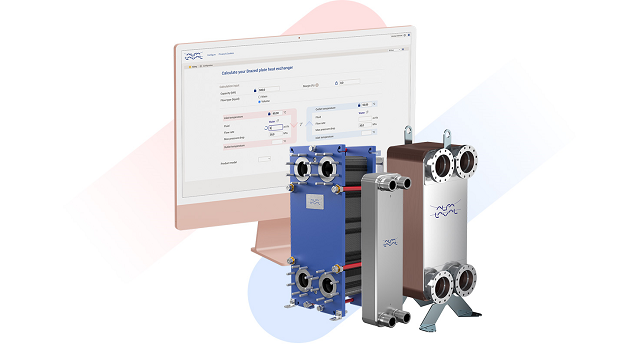
Alfa Laval PHE Select Tool
Discover the ideal plate heat exchanger for your requirements using PHE Select, our new selection software. Designed for user-friendly accessibility whenever you need it – find the best solution for your application quickly.
Contact an expert
Types of heat exchangers
Plate heat exchangers
Alfa Laval plate heat exchangers are highly efficient and compact devices designed for heat transfer in top industries like HVAC, chemical, food and beverage, pharmaceuticals and more. Alfa Laval's portfolio of plate heat exchangers includes:
Gasketed plate-and-frame heat exchangers
Air cooled heat exchangers
Alfa Laval air cooled heat exchangers, renowned for their robust design and superior heat dissipation capabilities, are utilized in demanding industries such as petrochemical, power generation, process cooling and more, where water availability or cost is a concern.
Scraped surface heat exchangers
Alfa Laval scraped surface heat exchangers are advanced thermal processing units employed in industries such as food and dairy, pharmaceuticals and chemicals. Their innovative design, featuring rotating scraping blades, ensures efficient heat transfer and prevents fouling, making them particularly suitable for applications involving viscous or sticky fluids where maintaining product quality is crucial.
Tubular heat exchangers
Alfa Laval tubular heat exchangers are versatile and widely used in high-pressure and high-temperature applications in industries such as marine and transportation, pharmaceuticals, petrochemicals, refineries, power generation, wastewater and more. Alfa Laval's portfolio of tubular heat exchangers includes:
Process shell-and-tube heat exchangers
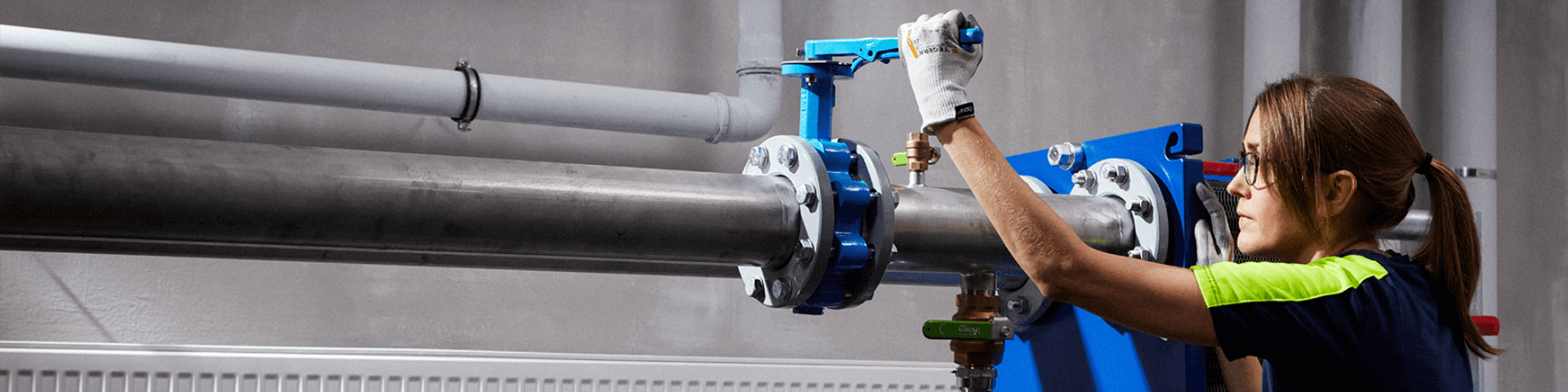
Heat exchanger solutions for optimal energy efficiency and reliability
When considering the purchase of a heat exchanger, several key factors should guide the decision-making process:
- Assess the specific requirements of your application, including fluid type, flow rates and temperature ranges
- Consider the material of construction for compatibility and longevity
- Evaluate the heat transfer efficiency and energy-saving features
- Assess the ease of maintenance and access for cleaning
- Research and choose a reputable supplier for comprehensive product support and warranty options
Known for innovative solutions, Alfa Laval's heat exchangers boast robust construction, ensuring durability and longevity. Our commitment to excellence extends to easy maintenance and operational flexibility, providing users with a hassle-free experience. With a reputation for top-tier performance and a focus on environmental responsibility, Alfa Laval heat exchangers continue to set industry standards for efficiency and reliability with designs that reduce energy consumption and minimize environmental impact.
Ask the HEXperts about GPHE performance
Is your gasketed plate heat exchanger running at its best? Discover how expert servicing and reconditioning can help restore efficiency, reduce downtime and extend equipment life.

When you buy Alfa Laval equipment, you buy peace of mind
Alfa Laval provides expert maintenance, repair and troubleshooting services for heat exchangers throughout their operational life, to ensure peak efficiency and prevent potential issues. In the event of a malfunction or parts failure, our team of skilled technicians is readily available to address concerns promptly and provide genuine spare parts, minimizing downtime and optimizing performance. With Alfa Laval's service offerings, you can trust in the continued efficiency and smooth operation of your heat exchanger for years to come.

Heat Exchangers - Frequently Asked Questions
How does a heat exchanger work?
A heat exchanger transfers thermal energy between two fluid streams - typically without them coming into direct contact - by passing them on either side of a conductive surface such as a metal plate or tube wall. The temperature difference between the two fluids drives heat to move from the hotter stream to the cooler one, allowing one fluid to be heated and the other to be cooled simultaneously and continuously.
The efficiency of this heat transfer depends on several factors: the surface area available for transfer, the thermal conductivity of the material, the flow velocity and turbulence of the fluids, and the temperature differential between them. Alfa Laval’s heat exchanger designs - refined over more than 130 years of engineering development - are specifically optimised to maximise all of these factors, delivering industry-leading thermal performance in the most compact possible footprint across a wide range of industrial, commercial, and marine applications.
What are the different types of heat exchanger?
Heat exchangers come in several distinct designs, each suited to different applications, operating conditions, and performance requirements. Alfa Laval manufactures one of the most comprehensive ranges of heat exchanger technologies in the world, including:
- Gasketed plate and frame heat exchangers - the most flexible and maintainable design, consisting of corrugated metal plates sealed with gaskets and held in a frame. Plates can be added, removed, or reconfigured to adjust capacity, making them ideal for processes where requirements may change over time. Widely used in HVAC, food and beverage, dairy, chemical processing, and district heating applications.
- Brazed plate heat exchangers - a compact, fully sealed design where the plates are permanently joined by brazing rather than gaskets. With no moving parts or seals to maintain, brazed plate heat exchangers are extremely robust and well suited to refrigeration, heat pump, and HVAC applications where a small footprint and high pressure resistance are required.
- Welded plate heat exchangers - designed for aggressive, high-temperature, or high-pressure applications where gaskets would be unsuitable. Alfa Laval’s welded range includes the Compabloc and Packinox designs, which deliver the efficiency of plate technology in a fully welded construction capable of handling demanding process conditions in chemical, petrochemical, and energy applications.
- Semi-welded plate heat exchangers - a hybrid design where alternating channels are welded for the aggressive fluid side and gasketed on the other, combining the chemical resistance of welded construction with the accessibility of a gasketed design. Particularly well suited to refrigeration and chemical applications involving aggressive media.
- Shell and tube heat exchangers - the traditional workhorse of industrial heat transfer, consisting of a bundle of tubes enclosed within a cylindrical shell. One fluid flows through the tubes while the other flows around them within the shell. Alfa Laval’s shell and tube range is designed for high-pressure and high-temperature duties where robustness and reliability are paramount, including oil and gas, power generation, and heavy industrial applications.
- Spiral heat exchangers - a unique design where two fluids flow in opposing spiral channels, creating highly turbulent flow that makes them exceptionally resistant to fouling. Alfa Laval’s spiral heat exchangers are particularly effective for viscous, fibrous, or particle-laden fluids that would block or foul conventional designs.
- Air heat exchangers - designed for gas-to-gas or gas-to-liquid heat transfer, used in applications such as compressed air cooling, process gas cooling, and HVAC air handling.
Each technology has its optimal application range. Alfa Laval’s application engineers work with customers to identify the right heat exchanger type - and the right model within that type - based on the specific process conditions, fluid properties, and performance requirements of each project.
What is a plate heat exchanger and how does it differ from other types?
A plate heat exchanger uses a series of thin, corrugated metal plates to create alternating channels through which two fluids flow in opposite directions. The corrugated pattern of the plates serves two purposes: it increases the effective surface area available for heat transfer, and it promotes turbulent flow in the fluid channels - which dramatically improves the rate of heat transfer compared to smooth surfaces.
The key differentiator of plate heat exchangers versus shell and tube designs is thermal efficiency per unit size. Alfa Laval’s own engineering data demonstrates that plate heat exchangers can achieve up to 5 times greater heat transfer efficiency per unit area compared to shell and tube equivalents - meaning a significantly smaller and lighter unit can handle the same thermal duty. This makes plate heat exchangers the preferred choice in applications where space, weight, or energy efficiency are important considerations. Alfa Laval pioneered the plate heat exchanger concept and remains the global technology leader in its development and manufacture.
What are heat exchangers used for in industrial applications?
Heat exchangers are fundamental to an enormous range of industrial processes — anywhere that heat needs to be added, removed, recovered, or transferred between process streams. Key industrial applications include:
- Food and beverage processing — pasteurisation, sterilisation, product heating and cooling, CIP cleaning
- Chemical and petrochemical processing — reactor feed/effluent heat recovery, solvent heating, product cooling
- Oil and gas — crude oil heating, gas cooling, offshore process heat management
- Pharmaceutical and biotechnology — precise temperature control for fermentation, API processing, and sterile manufacturing
- Power generation — condenser cooling, feedwater heating, waste heat recovery
- Marine — fuel oil heating, lube oil cooling, freshwater generation, HVAC
- HVAC and district energy — building heating and cooling, district heating substations, heat pump systems
- Data centres — liquid cooling infrastructure, waste heat recovery for district heating integration
Alfa Laval’s heat exchangers are active in virtually every one of these sectors, with dedicated product ranges and application engineering expertise developed specifically for each industry’s unique demands - rather than generic solutions adapted from other markets.
How do I choose the right heat exchanger for my application?
Selecting the right heat exchanger involves evaluating several key parameters simultaneously:
- Thermal duty — the amount of heat that needs to be transferred (kW or MW)
- Fluid properties — viscosity, corrosiveness, fouling tendency, and whether solids are present
- Operating temperatures and pressures — these determine which construction types are viable
- Flow rates — on both the hot and cold sides
- Space and weight constraints — particularly relevant in marine, offshore, and retrofit applications
- Maintenance requirements — how frequently the unit needs to be accessed and cleaned
- Regulatory or hygiene requirements — critical in food, pharmaceutical, and potable water applications
The interaction between these factors is complex - a fluid that is highly corrosive may rule out certain plate materials; a very high operating pressure may require a welded or shell and tube design rather than a gasketed plate unit; a heavily fouling fluid may be better suited to a spiral heat exchanger than a plate design.
Alfa Laval’s application engineers use proprietary thermal sizing and simulation tools - developed and refined over decades of global installations - to evaluate all of these parameters and recommend the optimal solution. With one of the broadest heat exchanger portfolios in the world, Alfa Laval can match the right technology to virtually any application rather than fitting a process around a limited product range.
What should I look for in a heat exchanger manufacturer?
Choosing a heat exchanger manufacturer is as important as choosing the right heat exchanger type. Key factors to consider include:
- Portfolio breadth — a manufacturer with a wide range of technologies can recommend the genuinely optimal solution rather than defaulting to whatever they happen to make
- Application engineering expertise — can they size and specify the unit correctly for your exact process conditions, or are they simply selling off-the-shelf products?
- Materials knowledge — do they understand the interaction between your process fluids and different plate and gasket materials, and can they advise on long-term compatibility?
- Global service and support — can they provide spare parts, field service, and maintenance support wherever your operations are located?
- Manufacturing quality and certification — are their products independently tested and certified to relevant industry standards?
- Track record — do they have proven installations in your industry and application type?
Alfa Laval has been manufacturing heat exchangers for over 130 years and holds a leading position in the global market across multiple heat exchanger technologies. With manufacturing facilities, service centres, and application engineering teams in more than 100 countries, Alfa Laval offers not just the equipment but the expertise and support infrastructure to ensure it performs throughout its operational life - which, with proper maintenance, can span several decades.